AI Chatbots in Hospitality: Drive Bookings & Better Service
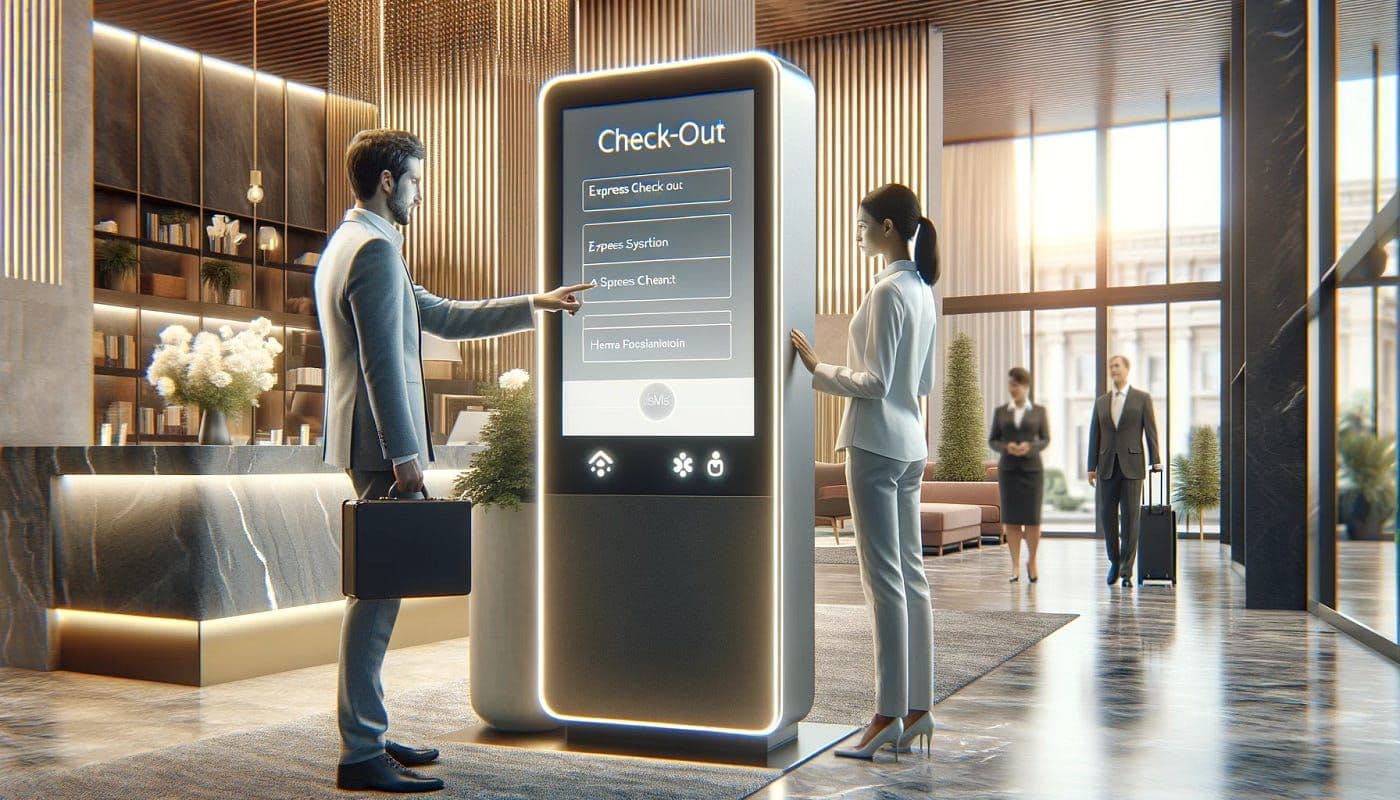
The hospitality industry is rapidly embracing AI as guest expectations continue to evolve. Today’s travelers expect instant responses, personalized recommendations, and seamless communication throughout their booking journey. To meet these demands while improving operational efficiency, more hotels are turning to AI chatbots.
Modern AI chatbots do far more than answer FAQs. They can engage potential guests 24/7, increase direct bookings, automate routine tasks, support multiple languages, and deliver personalized experiences that improve guest satisfaction while reducing the workload for hotel staff.
In this blog, we’ll explore how AI chatbots are transforming the hospitality industry, helping hotels drive more direct bookings, enhance guest service, streamline daily operations, and unlock new revenue opportunities.
Why Guest Expectations Have Changed Completely
Hospitality has become increasingly digital, and guest expectations have changed dramatically over the past few years. Travelers are no longer willing to wait hours or even minutes for answers. Instead, they expect hotels to deliver fast, convenient, and personalized service whenever they need it. Several factors are driving this shift.
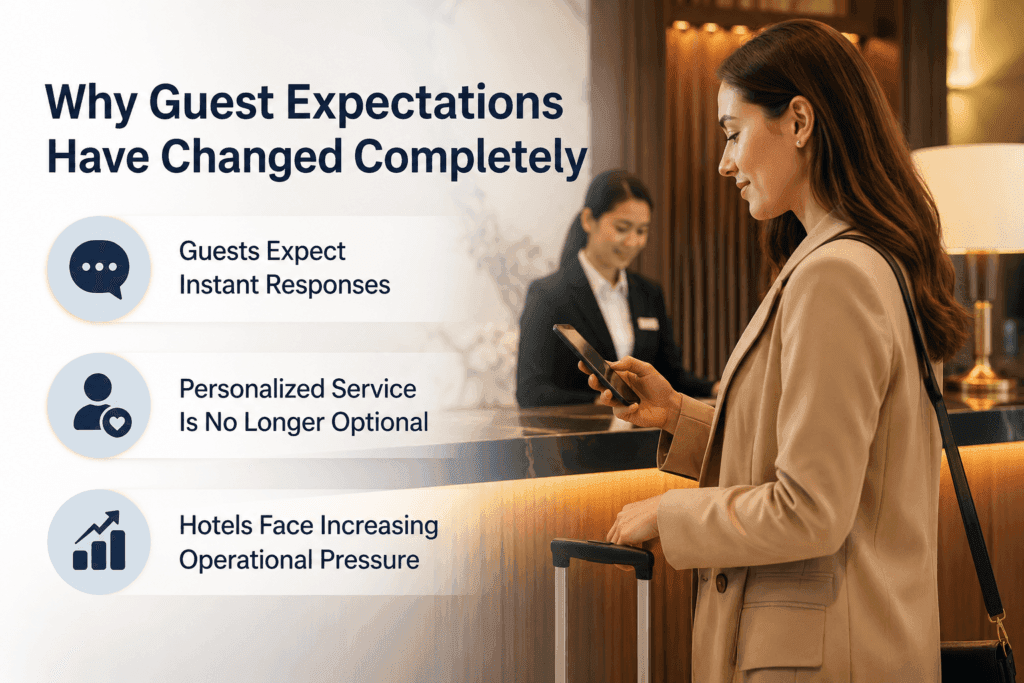
Guests Expect Instant Responses
Today’s travelers research, compare, and book accommodations online. Before making a reservation, they often have questions about room availability, pricing, amenities, transportation, check-in times, or cancellation policies.
If those questions aren’t answered immediately, many potential guests simply move on to another hotel.
Because booking decisions happen quickly, response speed has become a competitive advantage. AI chatbots provide instant answers 24/7, ensuring hotels never miss opportunities simply because staff members are unavailable.
Personalized Service Is No Longer Optional
Modern travelers expect hotels to understand their preferences rather than provide generic experiences.
Whether recommending the most suitable room type, suggesting local attractions, or remembering returning guests’ preferences, personalization has become a key factor influencing customer satisfaction and loyalty.
AI chatbots make personalized communication possible at scale by using guest data and previous interactions to deliver relevant recommendations automatically.
Hotels Face Increasing Operational Pressure
At the same time, hospitality businesses are dealing with labor shortages, rising operational costs, and growing guest expectations.
Front desk staff often spend a significant portion of their day answering repetitive questions instead of focusing on delivering memorable guest experiences.
AI automation helps hotels maintain exceptional service quality while allowing employees to concentrate on tasks that require empathy, problem-solving, and human interaction.
What Is an AI Chatbot in Hospitality?
An AI chatbot is an intelligent virtual assistant that communicates with guests through natural language. Unlike traditional rule-based chatbots that only respond to predefined commands, AI chatbots understand context, interpret intent, and provide conversational responses that feel more natural.
Powered by advanced artificial intelligence and large language models (LLMs), these chatbots continuously improve their responses while supporting increasingly complex guest interactions.
8 Ways AI Chatbots Help Hotels Increase Revenue and Improve Guest Service
AI chatbots help hotels do much more than answer guest questions. From increasing direct bookings to automating guest support and creating personalized experiences, they improve operational efficiency while driving measurable business growth.
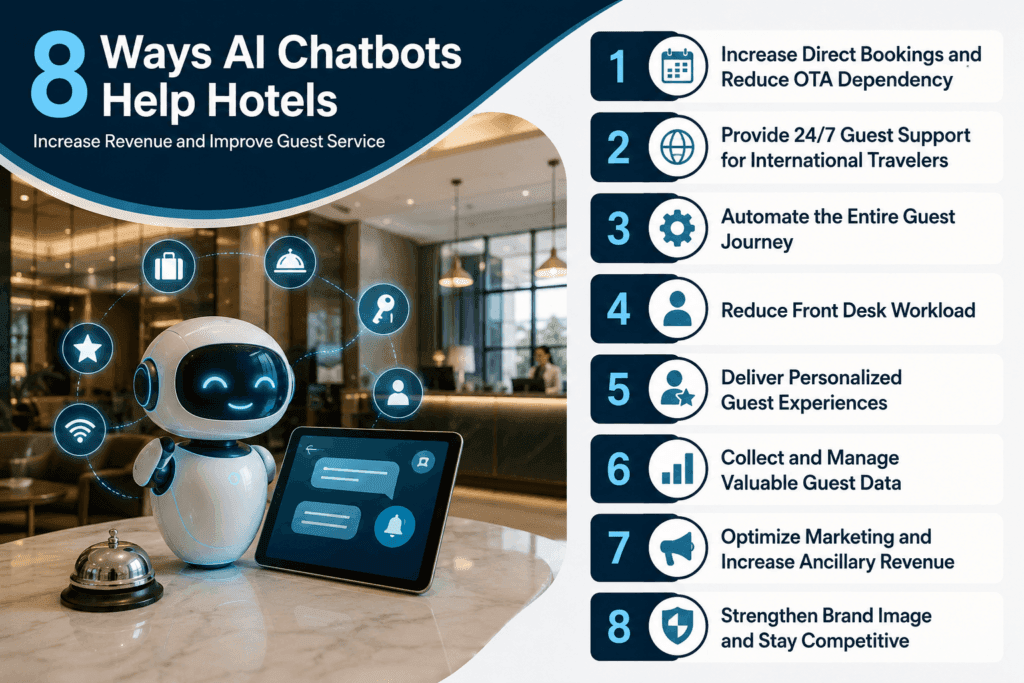
Increase Direct Bookings and Reduce OTA Dependency
Online Travel Agencies (OTAs) help hotels reach more travelers, but high commission fees can significantly reduce profit margins. AI chatbots encourage more direct bookings by engaging visitors the moment they land on your website.
Instead of waiting for a staff response, guests can instantly ask about room availability, pricing, amenities, promotions, or cancellation policies. The chatbot provides immediate answers, recommends suitable room types, and guides guests through the booking process, making reservations faster and more convenient.
Key benefits include:
- Increase direct booking conversions
- Reduce OTA commission costs
- Recover abandoned bookings
- Improve website conversion rates
- Generate more qualified booking leads
Provide 24/7 Guest Support for International Travelers
Travelers expect fast responses regardless of time zone. AI chatbots provide 24/7 support, ensuring guests can receive assistance anytime without waiting for hotel staff.
Whether guests need information about check-in times, airport transfers, Wi-Fi, breakfast hours, parking, or hotel facilities, the chatbot delivers instant and accurate answers. With multilingual capabilities, hotels can also communicate with international travelers more effectively and provide a consistent guest experience across global markets.
Key benefits include:
- Deliver instant support 24/7
- Assist guests in multiple languages
- Improve guest satisfaction
- Never miss booking opportunities outside business hours
- Reduce pressure on front desk teams
Automate the Entire Guest Journey
AI chatbots support guests at every stage of their journey from booking to post-stay follow-up. They can automatically answer inquiries, confirm reservations, share check-in details, handle in-stay service requests, and send review requests or promotional offers after checkout.
By automating routine interactions, hotels deliver faster, more consistent service while allowing staff to focus on creating memorable guest experiences.
Key benefits include:
- Automate pre-stay, in-stay, and post-stay communication
- Speed up guest service requests
- Deliver a seamless guest experience
- Improve operational efficiency
- Increase guest satisfaction and loyalty
Reduce Front Desk Workload
Front desk teams spend a significant amount of time answering repetitive questions about room availability, check-in times, hotel facilities, and other common requests. AI chatbots handle these inquiries instantly, reducing manual workloads and improving response times.
Rather than replacing hotel staff, chatbots free employees to focus on personalized service, guest relationships, and more complex requests that require human attention.
Key benefits include:
- Reduce repetitive guest inquiries
- Improve staff productivity
- Shorten response and waiting times
- Lower operational costs
- Enhance overall service quality
Deliver Personalized Guest Experiences
Personalization has become a key differentiator in hospitality. AI chatbots use guest preferences, booking history, and previous interactions to recommend relevant rooms, services, upgrades, and local experiences tailored to each traveler.
By providing personalized communication throughout the guest journey, hotels can build stronger relationships, improve satisfaction, and encourage repeat visits.
Key benefits include:
- Recommend personalized rooms and offers
- Recognize returning guests
- Increase guest engagement
- Improve customer loyalty
- Create memorable travel experiences
Collect and Manage Valuable Guest Data
Every guest interaction provides valuable insights. AI chatbots automatically collect and organize customer data, including booking preferences, conversation history, special requests, and contact information, creating a centralized guest profile for future engagement.
When integrated with CRM and hotel management systems, this data helps hotels better understand guest behavior, personalize communication, and make more informed business decisions.
Key benefits include:
- Capture first-party customer data
- Build comprehensive guest profiles
- Improve audience segmentation
- Support personalized marketing campaigns
- Generate actionable business insights
Optimize Marketing and Increase Ancillary Revenue
AI chatbots create new revenue opportunities by promoting relevant services throughout the guest journey. Based on guest preferences and booking behavior, they can recommend room upgrades, spa packages, restaurant reservations, airport transfers, tours, and other add-on services at the right moment.
This personalized approach increases conversion rates while helping hotels maximize the value of every reservation without additional manual effort.
Key benefits include:
- Increase upselling and cross-selling opportunities
- Promote personalized offers automatically
- Boost ancillary revenue
- Improve marketing campaign performance
- Increase average booking value
Strengthen Brand Image and Stay Competitive
Fast, personalized, and always-available service helps hotels create a stronger digital presence and deliver a more professional guest experience. AI chatbots ensure consistent communication across every touchpoint, reinforcing trust and improving overall brand perception.
As AI adoption continues to grow across the hospitality industry, hotels that embrace intelligent automation are better positioned to meet evolving guest expectations and stay ahead of the competition.
Key benefits include:
- Deliver a modern digital guest experience
- Improve brand credibility and trust
- Maintain consistent service quality
- Increase positive guest reviews
- Build a stronger competitive advantage
The Future of AI Chatbots in Hospitality
AI chatbots are rapidly evolving from simple customer support tools into intelligent virtual assistants that can manage complex guest interactions. With advances in generative AI, hotels will be able to deliver more natural conversations, hyper-personalized recommendations, and proactive support throughout the entire guest journey.
As AI technology continues to mature, chatbots will become even more deeply integrated with hotel systems such as PMS, CRM, booking engines, and smart room technologies. This will enable hotels to automate more operations, gain deeper guest insights, and deliver faster, more personalized service at scale.
Hotels that adopt AI chatbots today will be better positioned to meet rising guest expectations, improve operational efficiency, and build a lasting competitive advantage in an increasingly digital hospitality industry.
Final Thoughts
Guest expectations are evolving, and delivering fast, personalized, and seamless service has become essential for every hotel. AI chatbots help hospitality businesses meet these expectations by increasing direct bookings, providing 24/7 support, automating guest communication, and creating more personalized experiences.
Beyond improving guest satisfaction, AI chatbots also reduce operational costs, streamline hotel operations, and unlock new revenue opportunities through smarter marketing and upselling. As the hospitality industry continues its digital transformation, investing in AI chatbot technology is no longer just an innovation. It’s a strategic decision that helps hotels stay competitive and drive long-term business growth.