



Artificial Intelligence is rapidly moving from a supportive capability to a central engine of innovation across modern enterprises. Its advancements in automation, generative modeling and real time analytics are redefining how organizations operate, scale and deliver value. As AI becomes embedded into products, workflows and strategic decisions, it is reshaping competitive advantages and setting new standards for speed, efficiency and customer experience.
In this blog, we explore how AI is driving innovation across industries, the key impacts shaping business transformation, the core challenges companies must overcome and the market trends that will influence AI adoption in the years ahead. This provides a clear, strategic view of where AI is heading and what businesses need to prepare for next.
How AI Is Reshaping Global Industries Today
AI has moved beyond experimentation and is now embedded in core business operations across the world. Below is a closer look at how AI is delivering measurable transformation in major sectors.
Chăm sóc sức khỏe
AI is redefining clinical workflows by enhancing diagnostic accuracy and improving treatment planning. Hospitals are integrating AI enhanced imaging tools that assist radiologists in identifying abnormalities such as tumors and cardiovascular issues earlier and more consistently. Clinical decision support systems synthesize patient histories, lab results and symptom patterns to propose evidence based treatment options, helping clinicians make more informed decisions.
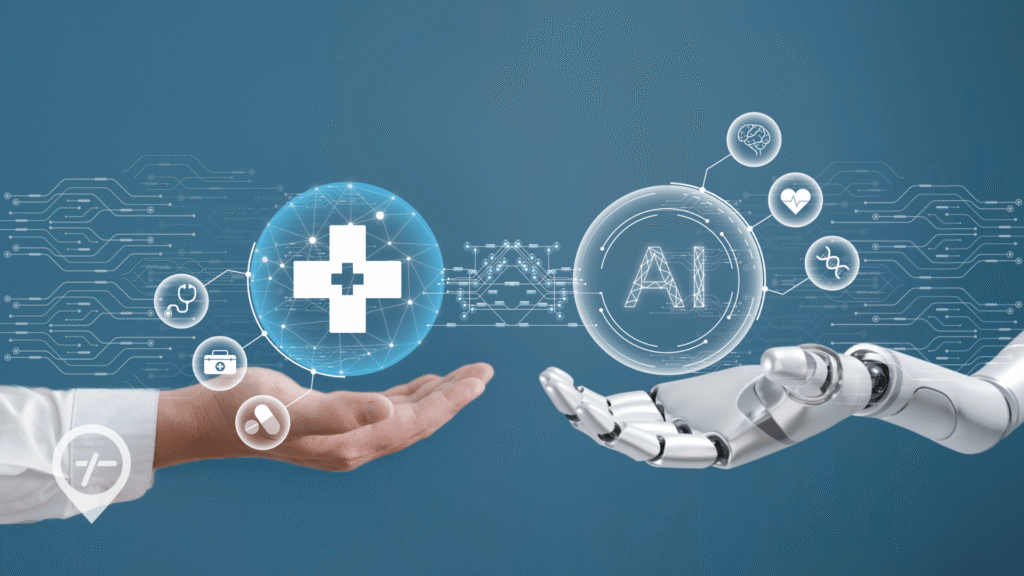
For example, several medical centers now use AI models that analyze CT scans for early stage lung cancer and detect subtle anomalies that may be missed in manual readings. AI is also accelerating pharmaceutical research, where machine learning models simulate molecular interactions at scale and shorten the drug discovery cycle from years to months.
Finance
In financial services, AI strengthens fraud detection, enhances risk modeling and improves service efficiency. Banks rely on AI systems that monitor millions of transactions in real time and identify unusual behavior before fraud escalates. Credit assessment models trained on both traditional and alternative data provide more accurate evaluations and support more inclusive lending decisions.

For example, leading digital banks deploy AI fraud engines capable of recognizing suspicious spending patterns within seconds, reducing financial losses dramatically. Investment firms also use AI powered forecasting to guide automated trading strategies, improve portfolio optimization and anticipate market shifts more effectively.
Bán lẻ và thương mại điện tử
AI enables retailers to deliver more personalized customer experiences while optimizing core operations. E-commerce platforms use AI recommendation engines that analyze browsing history, purchase behavior and preferences to suggest relevant products for each shopper. Physical stores are adopting computer vision to monitor shelf conditions, manage inventory more accurately and improve store layout decisions.
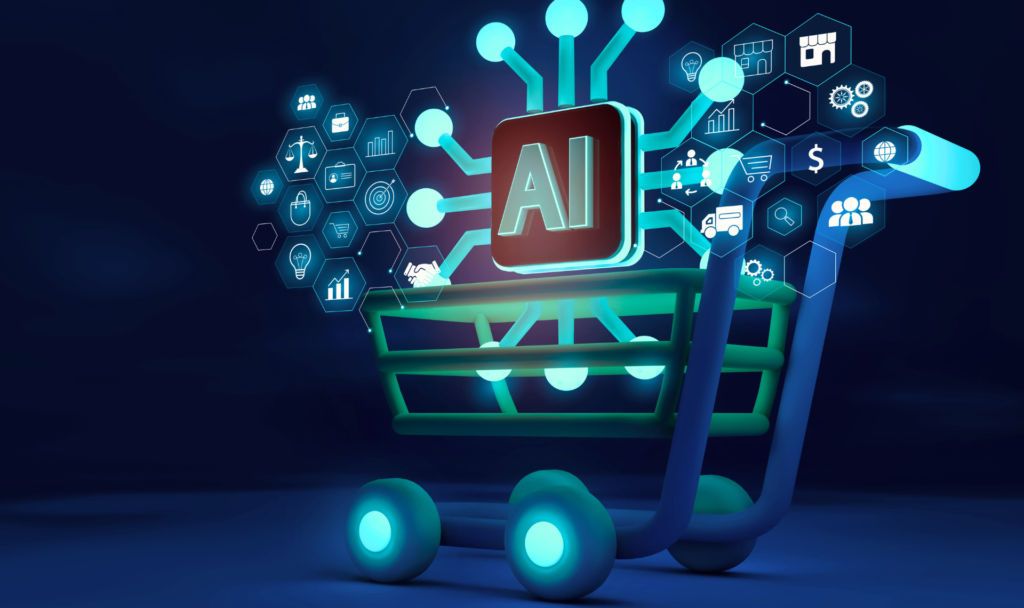
For example, major retail chains are applying AI forecasting tools that predict demand across regions and seasons with far greater accuracy than traditional models. This allows them to allocate stock efficiently, reduce waste and minimize the risk of both overstocks and out of stock situations. AI driven pricing engines also help retailers adjust promotions based on real time market signals.
Giáo dục và đào tạo
AI is transforming education by making learning more adaptive and data informed. Intelligent learning platforms evaluate how students interact with lessons and adjust content difficulty to match their pace and comprehension level. Tools for automated grading reduce the administrative burden on teachers, enabling them to focus more on instruction and student engagement.

For example, universities now use predictive analytics to identify students who may be at risk academically based on attendance, online participation and assignment trends. Advisors can then intervene earlier with personalized support. Language learning applications also rely on AI to provide real time pronunciation analysis and feedback, improving fluency more effectively than traditional techniques.
Emerging AI Trends That Are Defining the Future
AI is evolving quickly, and three major trends are beginning to shape how organizations design products, manage operations and ensure responsible innovation. These trends highlight a shift toward more intelligent, distributed and accountable AI systems that will influence every industry in the coming decade.
Generative AI
Generative AI is rapidly evolving into a foundational capability for modern enterprises. Its ability to create text, code, images, simulations and structured insights allows businesses to streamline complex workflows and accelerate the development of new products and services. As models become more multimodal and context aware, enterprises are beginning to integrate generative AI directly into core systems rather than treating it as an isolated tool.
This trend is reshaping how organizations approach creativity, productivity and knowledge management. Instead of relying solely on human driven processes, companies are building hybrid workflows where generative AI acts as an intelligence layer that enhances decision making, compresses development cycles and enables faster experimentation across teams.
Edge AI
Edge AI is gaining momentum as organizations seek faster, more autonomous decision making and reduced dependence on cloud connectivity. By processing data directly on devices, sensors or local gateways, edge AI lowers latency, strengthens data privacy and enables continuous operations even in bandwidth constrained environments. This is becoming critical for sectors that rely on instant responses or mission critical systems.

As AI models become more lightweight and efficient, deployment at the edge is expanding rapidly. Businesses are shifting toward distributed intelligence architectures, where insights are generated closer to the source of data. This trend supports greater resilience, cost efficiency and real time responsiveness across industrial, healthcare and consumer environments.
AI Governance
AI governance is emerging as one of the most important trends shaping enterprise AI strategies. As organizations deploy AI at scale, they must ensure that systems operate fairly, transparently and in compliance with evolving regulations. Governance frameworks now cover data quality, model explainability, ethical risk assessments, documentation standards and human oversight.

This trend underscores the shift from viewing AI as purely a technical asset to recognizing. It as a strategic capability that requires structured management. Effective governance not only mitigates risks but also builds trust among users, regulators and business partners. Companies that establish strong governance foundations today will be better positioned to scale AI responsibly and sustain innovation over the long term.
Key Challenges in Enterprise AI Adoption
As enterprises scale AI, they face critical technical and organizational challenges that must be addressed to achieve lasting value.
Strengthening Data Security and Privacy
As enterprises expand their AI capabilities, the amount of sensitive data being collected and processed grows rapidly. This increases exposure to privacy breaches, data misuse and regulatory non compliance. Ensuring that data remains accurate, protected and properly governed becomes a foundational requirement for any AI initiative. Companies must navigate evolving privacy laws while securing complex data pipelines that feed AI models across departments and systems.
To create a resilient AI environment, organizations need stronger security controls, transparent governance frameworks and continuous monitoring. Protecting sensitive information not only safeguards business operations but also builds trust with customers, partners and regulators. As AI continues to scale, data security and privacy will remain central to sustaining long term adoption.
Addressing Bias and Ensuring Fair AI
AI systems are only as reliable as the data they learn from, and historical datasets often contain imbalances that can lead to biased predictions. When left unchecked, these biases can influence hiring, lending, customer service and other critical decisions, resulting in inconsistent or unfair outcomes. This poses both ethical and operational challenges for enterprises adopting AI at scale.
Ensuring fairness requires ongoing evaluation of model behavior, greater transparency in how decisions are generated and stronger oversight across the AI lifecycle. By embedding fairness checks and governance practices into development workflows, enterprises can reduce risk and promote more consistent, equitable results. Fair AI ultimately strengthens user trust and supports responsible innovation.
Supporting Workforce Transition and Reskilling
AI is transforming job roles as automation takes over repetitive and data intensive tasks, shifting the skills required across the enterprise. This creates uncertainty for employees who may fear displacement or struggle to adapt to new responsibilities. Organizations must approach workforce transformation thoughtfully to maintain morale and ensure smooth adoption of AI powered systems.
Reskilling and upskilling initiatives play a critical role in enabling employees to thrive alongside AI. By providing ongoing training, clear career pathways and structured change management support, enterprises can empower teams to embrace new tools and capabilities. A skilled, AI ready workforce becomes a key driver of sustainable and competitive innovation.
Lời cuối
AI is no longer an emerging technology but a strategic catalyst that is reshaping how industries operate, innovate and compete. From healthcare and finance to retail and education, organizations that embrace AI early are gaining a measurable advantage in efficiency, customer value and long term growth. Yet the journey to meaningful AI adoption requires more than powerful algorithms. It demands responsible governance, strong data foundations and a clear strategy for integrating AI into core business operations.
For enterprises looking to move from experimentation to real impact, choosing the right technology partner is essential. Sphinx supports this transition by helping organizations build secure, scalable and intelligence driven solutions tailored to their unique challenges. As AI continues to evolve, Sphinx stands ready to help businesses unlock its full potential and accelerate their path toward sustainable innovation.


CEO - Son Le
OTHER BLOGS
Blogs
AI Driving Innovation: Key Impacts, Challenges and Market Trends
Artificial Intelligence is rapidly moving from a supportive capability to a central engine of innovation across modern enterprises. Its advancements in automation, generative modeling and real time analytics are redefining how organizations operate, scale and deliver value. As AI becomes embedded into products, workflows and strategic decisions, it is reshaping...
Xem thêmBlogs
Top 10 Countries for IT Outsourcing in 2026
IT outsourcing is becoming an increasingly popular strategy as businesses worldwide seek to accelerate digital transformation, reduce operational costs, and access specialized tech talent. With the rapid growth of cloud computing, AI, and software development demands, more companies are turning to global partners to stay competitive and scale efficiently. In...
Xem thêmBlogs
Transform Your Business with SAP Consulting Support
In today’s digital-first landscape, enterprise systems must evolve continuously to keep up with rising customer expectations, data complexity, and the demand for operational excellence. SAP plays a central role in this transformation, offering intelligent, integrated solutions that help organizations modernize their operations and drive long-term growth. However, SAP only delivers...
Xem thêmOTHER BLOGS
Our Sevices
IOT
SphinX offers cutting-edge IoT development services, seamlessly connecting devices and providing innovative solutions for a...
Xem thêmOur Sevices
Phát triển Blockchain
We are highly proficient in engineering reliable and secure blockchain technologies from the ground up,...
Xem thêmOur Sevices
PHÁT TRIỂN ERP & CRM
ERP & CRM development services that you need! Streamline business processes and enhance organizational efficiency....
Xem thêmOTHER BLOGS
Our Sevices
IOT
SphinX offers cutting-edge IoT development services, seamlessly connecting devices and providing innovative solutions for a...
Xem thêmOur Sevices
Phát triển Blockchain
We are highly proficient in engineering reliable and secure blockchain technologies from the ground up,...
Xem thêmOur Sevices
PHÁT TRIỂN ERP & CRM
ERP & CRM development services that you need! Streamline business processes and enhance organizational efficiency....
Xem thêm