



Outsourcing has become a strategic lever for businesses seeking agility, cost efficiency, and access to specialized expertise. However, not all outsourcing models deliver the same value, and choosing the wrong approach can lead to operational friction, misaligned expectations, and limited returns.
From traditional staff augmentation to fully managed services and project-based partnerships, each outsourcing type serves a distinct business objective. Understanding these differences is essential for selecting a model that aligns with your organization’s scale, technical needs, and long-term growth strategy.
In this blog, we explore 10 types of outsourcing in detail, outlining their key characteristics, advantages, and ideal use cases to help you determine which option is best for your business.
Read more:
10 Types of Outsourcing
Outsourcing encompasses a wide range of models, each designed to address specific operational, technical, and strategic needs. Understanding the 10 types of outsourcing below helps businesses evaluate available options and select the approach that best aligns with their objectives, scale, and long-term growth strategy.
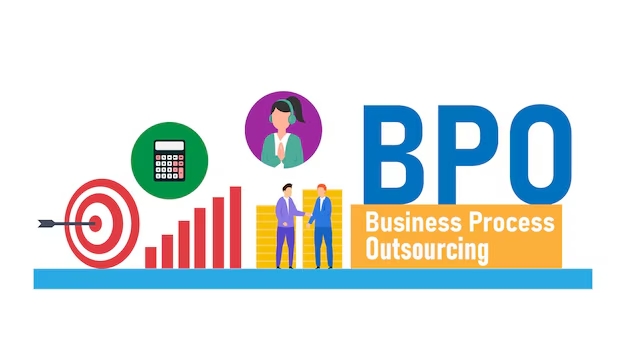
1. Business Process Outsourcing (BPO)
Business Process Outsourcing focuses on delegating standardized, process-driven business functions that are essential but not strategically differentiating. These processes are typically rule-based, repeatable, and volume-driven, making them suitable for external execution at scale.
Industries: Banking and finance, insurance, healthcare, retail, telecommunications, large enterprises.
Pros:
- Reduces operational and administrative costs through standardized processes
- Improves efficiency, accuracy, and consistency at scale
- Frees internal teams to focus on core, value-driving activities
Cons:
- Limited flexibility for highly customized or evolving workflows
- Data security and regulatory compliance risks if governance is weak
- Service quality depends heavily on provider maturity and SLAs
2. Information Technology Outsourcing (ITO)
Information Technology Outsourcing involves transferring responsibility for IT infrastructure and operational management to specialized providers. This model typically covers system administration, cloud infrastructure, cybersecurity, application maintenance, and technical support.
Industries: Technology-driven enterprises, manufacturing, finance, logistics, multinational corporations.
Pros:
- Access to specialized IT expertise and enterprise-grade infrastructure
- Lower capital expenditure on systems, tools, and maintenance
- Improved scalability, reliability, and cybersecurity posture
Cons:
- Reduced direct control over IT operations
- Vendor dependency can impact responsiveness and innovation speed
- Integration challenges with internal systems and processes
3. Software Development Outsourcing
Software Development Outsourcing is a specialized form of IT outsourcing focused exclusively on building, testing, and maintaining software products. It is often used to accelerate development cycles or compensate for internal skill gaps.

Industries: SaaS, fintech, healthcare, e-commerce, startups, digital-first enterprises.
Pros:
- Accelerates time to market with scalable engineering resources
- Access to global talent and niche technical expertise
- More cost-effective than building and maintaining large in-house teams
Cons:
- Communication and time zone differences may affect collaboration
- Risk of misalignment between business goals and technical execution
- Requires strong governance to maintain code quality and consistency
4. Knowledge Process Outsourcing (KPO)
Knowledge Process Outsourcing focuses on high-value, analytical, and expertise-driven activities that directly support strategic decision-making. Unlike transactional outsourcing, KPO requires deep domain knowledge and advanced cognitive skills.

Industries: Financial services, legal, pharmaceuticals, consulting, research-intensive sectors
Pros:
- Provides deep domain expertise and advanced analytical capabilities
- Supports strategic decision-making and innovation
- Enhances competitive advantage in complex, data-driven environments
Cons:
- Higher costs compared to transactional outsourcing models
- Longer onboarding and knowledge transfer cycles
- Intellectual property and confidentiality risks
5. Process-Specific Outsourcing
Process-Specific Outsourcing isolates a single operational process for outsourcing rather than an entire function. This approach is often used to optimize performance in targeted areas without disrupting broader operations.
Industries: Healthcare administration, insurance, logistics, retail operations
Pros:
- Highly efficient for well-defined, repeatable processes
- Faster implementation with lower organizational disruption
- Clear performance metrics and accountability
Cons:
- Limited strategic impact beyond the outsourced process
- Risk of process fragmentation if not well integrated
- Dependency on vendor performance for a critical workflow
6. Professional Outsourcing
Professional Outsourcing involves contracting external professionals or firms to provide specialized services that require formal qualifications, certifications, or extensive experience.

Industries: Legal, accounting, engineering, IT consulting, marketing services
Pros:
- Immediate access to certified and experienced professionals
- Ensures quality, compliance, and best practices
- Eliminates long-term hiring and training costs
Cons:
- Higher hourly or project-based fees
- Limited internal capability development
- Potential over-reliance on external advisors
7. Project Outsourcing
Project Outsourcing assigns end-to-end responsibility for a defined project to an external provider, including planning, execution, and delivery.
Industries: IT development, digital transformation, construction, product innovation
Pros:
- Clearly defined scope, timeline, and budget
- Reduced internal management overhead
- Ideal for one-time or highly specialized initiatives
Cons:
- Limited flexibility once the project scope is locked
- Changes can increase cost and delay delivery
- Success depends on precise requirement definition upfront
8. Manufacturing Outsourcing
Manufacturing Outsourcing transfers production activities to third-party manufacturers, often in cost-competitive regions.
Industries: Electronics, automotive, consumer goods, industrial manufacturing
Pros:
- Significant reduction in production and labor costs
- Scalable manufacturing capacity
- Allows focus on design, branding, and market growth
Cons:
- Quality control and consistency challenges
- Supply chain and geopolitical risks
- Reduced visibility into production processes
9. Multisource Outsourcing
Multisource Outsourcing distributes services across multiple vendors rather than relying on a single provider.
Industries: Large enterprises, global organizations with complex operations
Pros:
- Reduces dependency on a single vendor
- Enables best-in-class provider selection per function
- Improves risk diversification and flexibility
Cons:
- Increased coordination and governance complexity
- Integration challenges across multiple vendors
- Higher management overhead
10. Operational Outsourcing
Operational Outsourcing focuses on day-to-day business operations that are critical for continuity but not core to competitive differentiation.
Industries: Logistics, retail, utilities, manufacturing, service operations
Pros:
- Improves day-to-day operational efficiency and continuity
- Predictable operating costs
- Allows leadership to focus on strategic priorities
Cons:
- Reduced operational visibility and direct control
- Service disruption risks if provider performance declines
- Requires strong monitoring and performance management
Location-Based Outsourcing Models: Onshore vs Nearshore vs Offshore
Choosing an outsourcing model based on location directly affects collaboration efficiency, cost structure, delivery speed, and risk management. Understanding how onshore, nearshore, and offshore outsourcing differ helps businesses align their sourcing strategy with operational priorities and long-term objectives.
Onshore Outsourcing
Onshore outsourcing involves engaging a service provider within the same country as the client. This model prioritizes geographic proximity, shared language, cultural consistency, and alignment with domestic legal and regulatory standards.
Pros:
- High communication efficiency: Teams operate in the same time zone and business environment, enabling real-time discussions, rapid feedback, and fewer misunderstandings.
- Strong cultural and workflow alignment: Similar work ethics, decision-making styles, and business norms reduce friction during collaboration.
- Regulatory and compliance assurance: Onshore providers are subject to the same data protection, labor, and industry regulations, lowering compliance risks in regulated sectors.
- Better control and visibility: Easier governance, performance monitoring, and stakeholder involvement, especially for sensitive or mission-critical systems.
Cons:
- High cost structure: Labor, infrastructure, and service fees are significantly higher, reducing cost optimization benefits.
- Limited scalability: Expanding teams quickly can be difficult due to higher hiring costs and talent competition.
- Opportunity cost: Over-investment in onshore outsourcing may reduce budget flexibility for innovation or growth initiatives.
Nearshore Outsourcing
Nearshore outsourcing refers to partnering with service providers in neighboring or geographically close countries, typically within similar or overlapping time zones.
Pros:
- Balanced cost efficiency: Nearshore providers offer lower costs than onshore options while maintaining acceptable collaboration quality.
- Time zone compatibility: Overlapping working hours enable agile development, frequent check-ins, and faster issue resolution.
- Cultural proximity: Similar cultural norms and communication styles improve team integration and reduce coordination friction.
- Operational flexibility: Easier travel and occasional on-site collaboration support long-term partnerships and complex projects.
Cons:
- Moderate cost savings: While cheaper than onshore, nearshore outsourcing does not deliver the deep cost reductions of offshore models.
- Regional talent constraints: Talent pools may be smaller, limiting access to rare or highly specialized skill sets.
- Regional risk exposure: Economic or political instability in specific regions can impact service continuity.
Offshore Outsourcing
Offshore outsourcing involves engaging service providers located in distant countries, often across continents, to leverage lower labor costs and large-scale talent availability.
Pros:
- Significant cost reduction: Offshore outsourcing delivers the highest cost efficiency, enabling businesses to reallocate budgets toward growth or innovation.
- Access to global talent at scale: Large, mature outsourcing markets provide extensive expertise across technologies and domains.
- High scalability: Organizations can rapidly scale teams up or down to meet fluctuating project demands.
- Extended development cycles: Time zone differences can support near 24/7 development and faster overall delivery when properly managed.
Cons:
- Communication complexity: Time zone gaps and language differences can slow decision-making and feedback loops.
- Cultural misalignment risks: Differences in work culture and expectations may affect productivity and collaboration if not actively managed.
- Higher governance requirements: Successful offshore outsourcing depends on strong documentation, structured processes, and experienced project management.
- Compliance and data security concerns: Additional safeguards are required to protect sensitive data and intellectual property.
Key Factors in Selecting the Right Outsourcing Model
Selecting the right outsourcing model goes beyond cost considerations and requires alignment with business objectives, operational complexity, risk tolerance, and long-term growth goals. The following factors provide a structured framework to evaluate outsourcing options and avoid common pitfalls.
Business Objectives and Strategic Alignment
The first consideration is whether outsourcing supports core business goals. Some models are designed to reduce operational costs, while others focus on accelerating innovation, improving service quality, or scaling capacity. A clear understanding of strategic priorities ensures the chosen model delivers measurable business value rather than short-term efficiency gains.
Cost Structure and Budget Flexibility
Different outsourcing models involve varying cost structures, including fixed pricing, time-and-materials, or outcome-based contracts. Organizations should assess not only immediate cost savings but also long-term financial implications such as scalability, hidden management costs, and currency or pricing volatility.
Level of Control and Governance
Outsourcing inherently transfers a degree of control to external providers. Businesses must determine how much oversight they require over processes, technology, and decision-making. Models with higher autonomy may reduce internal workload but demand robust governance frameworks, performance metrics, and escalation mechanisms.
Communication and Collaboration Requirements
The complexity of communication varies significantly across outsourcing models. Projects requiring frequent interaction, rapid iteration, or cross-functional collaboration benefit from models with strong communication alignment, including overlapping time zones and cultural compatibility.
Data Security and Compliance
For industries handling sensitive data or operating under strict regulations, security and compliance are critical factors. Organizations should evaluate a provider’s data protection standards, regulatory certifications, and risk management practices to ensure alignment with legal and industry requirements.
Talent Availability and Skill Specialization
Access to the right skills is often a primary driver of outsourcing decisions. Businesses should assess whether a model provides sufficient access to specialized expertise, emerging technologies, or domain knowledge that may be difficult or costly to develop internally.
Scalability and Flexibility
Outsourcing models differ in their ability to scale resources up or down. Companies experiencing fluctuating demand or rapid growth should prioritize models that offer flexibility without excessive contractual or operational constraints.
Risk Management and Vendor Dependence
Relying on external providers introduces risks related to performance, continuity, and vendor lock-in. A clear risk assessment helps determine whether single-vendor, multi-vendor, or hybrid models are more appropriate based on the organization’s risk tolerance.
Final Thoughts
Outsourcing delivers the greatest value when it is aligned with business strategy, operational priorities, and long-term growth objectives. Choosing the right outsourcing model allows organizations to improve efficiency, access specialized expertise, and scale with confidence while maintaining the level of control required for sustainable performance.
At Sphinx, we work closely with businesses to design outsourcing approaches tailored to their specific needs. If you are evaluating outsourcing options or refining an existing model, exploring solutions developed by Sphinx can be a practical first step toward building a more resilient and future-ready organization.



CEO - Son Le
OTHER BLOGS
Blogs
AI Chatbot Applications: Benefits, Use Cases, and Future Trends
Artificial Intelligence (AI) is rapidly transforming the way businesses communicate with customers, automate workflows, and deliver personalized experiences. At the center of this transformation is the AI chatbot, an intelligent virtual assistant capable of understanding natural language, answering questions, and supporting users across websites, mobile apps, and messaging platforms. As...
Read MoreBlogs
How AI Is Revolutionizing Hotel Operations and Revenue
The hospitality industry is undergoing one of its biggest transformations in decades. As guest expectations continue to rise and operational costs increase, hotels are turning to Artificial Intelligence (AI) to stay competitive. From maximizing room revenue to delivering personalized guest experiences, AI is no longer a futuristic concept. It has...
Read MoreBlogs
AI Chatbots in Hospitality: Drive Bookings & Better Service
The hospitality industry is rapidly embracing AI as guest expectations continue to evolve. Today’s travelers expect instant responses, personalized recommendations, and seamless communication throughout their booking journey. To meet these demands while improving operational efficiency, more hotels are turning to AI chatbots. Modern AI chatbots do far more than answer...
Read MoreOTHER BLOGS
Our Sevices
IoT Development
SphinX offers cutting-edge IoT development services, seamlessly connecting devices and providing innovative solutions for a...
Xem thêmOur Sevices
Blockchain Development
We are highly proficient in engineering reliable and secure blockchain technologies from the ground up,...
Xem thêmOur Sevices
ERP & CRM Development
ERP & CRM development services that you need! Streamline business processes and enhance organizational efficiency....
Xem thêmOTHER BLOGS
Our Sevices
IoT Development
SphinX offers cutting-edge IoT development services, seamlessly connecting devices and providing innovative solutions for a...
Xem thêmOur Sevices
Blockchain Development
We are highly proficient in engineering reliable and secure blockchain technologies from the ground up,...
Xem thêmOur Sevices
ERP & CRM Development
ERP & CRM development services that you need! Streamline business processes and enhance organizational efficiency....
Xem thêm