Types of AI Agents Transforming Business Processes in 2026
Artificial intelligence is no longer limited to chatbots or simple automation tools. In 2026, AI agents are becoming a core part of how businesses operate, communicate, and scale. From handling customer support to managing workflows and making real time decisions, AI agents are transforming business processes across industries.
As organizations continue adopting AI driven systems, understanding the different types of AI agents and their practical applications is becoming essential for business leaders, marketers, and technology teams. In this blog, we explore what AI agents are, the main types of AI agents transforming modern businesses, their key benefits, and the real world applications driving innovation across industries in 2026.
What is an AI Agent?
An AI agent is an intelligent software system designed to perform tasks autonomously based on goals, data, and interactions. Unlike traditional automation tools that follow fixed rules, AI agents can analyze information, learn from context, and make decisions with minimal human involvement.
AI agents often combine technologies such as:
- Natural language processing (NLP)
- Machine learning
- Voice recognition
- Workflow automation
- Generative AI
- Predictive analytics
In business environments, AI agents can communicate with customers, assist employees, automate repetitive tasks, and even collaborate with other AI systems.
For example, an AI voice agent can answer customer calls, verify information, and resolve common issues without requiring a human operator.
Types of AI Agents
As AI adoption continues to grow, businesses are no longer relying on a single intelligent system. Instead, organizations are integrating multiple types of AI agents depending on the complexity of their operations, customer expectations, and automation goals. Each type of AI agent is designed with different levels of intelligence, adaptability, and decision making capability.
Reactive AI Agents
Reactive AI agents represent the most foundational form of AI systems. These agents respond directly to incoming inputs without retaining memory or learning from previous interactions. Their intelligence is limited to predefined conditions and immediate context.
While relatively simple, reactive AI agents remain important because they deliver speed, consistency, and scalability. They are highly effective in environments where tasks are repetitive and predictable. However, their inability to understand long term context or evolve over time limits their performance in more dynamic business scenarios.
In 2026, reactive agents are often integrated into larger AI ecosystems where they handle high volume routine interactions while more advanced agents manage complex processes.
Goal Based AI Agents
Goal based AI agents move beyond simple reactions by evaluating actions according to a desired outcome. Instead of following fixed responses, these agents analyze multiple possibilities and determine which action best aligns with predefined objectives.
This makes them significantly more flexible in business environments where decision making requires balancing efficiency, accuracy, and customer expectations. Goal based agents can adapt to changing conditions and optimize workflows in real time.
Their growing importance reflects a broader shift toward intelligent automation, where businesses expect AI systems not only to execute tasks but also to contribute to operational optimization and strategic performance.
Learning AI Agents
Learning AI agents continuously improve through data, feedback, and experience. Unlike static systems, these agents evolve over time by identifying patterns, refining predictions, and adapting to user behavior.
This capability makes learning agents especially valuable in industries driven by personalization and large scale data analysis. In 2026, businesses increasingly rely on learning AI agents to enhance customer engagement, improve forecasting accuracy, and automate complex analytical processes.
The ability to self improve allows these agents to deliver increasingly accurate results over time, creating long term efficiency gains and more intelligent business operations.
Multi Agent Systems
Multi agent systems consist of multiple AI agents working collaboratively within the same environment. Rather than depending on a single centralized intelligence, these systems distribute responsibilities across specialized agents that communicate and coordinate with each other.
This architecture is becoming increasingly relevant for enterprise level operations where business processes are interconnected across departments, platforms, and data systems. Multi agent systems improve scalability, flexibility, and resilience by allowing organizations to automate complex workflows more efficiently.
In 2026, many businesses are adopting multi agent frameworks to support real time operations, autonomous coordination, and enterprise wide decision making.
Conversational AI Agents
Conversational AI agents are designed to interact naturally with humans through voice or text communication. Advances in natural language processing and generative AI have significantly improved the ability of these agents to understand intent, maintain context, and deliver human like interactions.
Modern conversational agents are no longer limited to answering basic questions. They are increasingly capable of handling emotionally aware conversations, multilingual communication, and personalized customer experiences.
As customer expectations continue rising, conversational AI agents are becoming a critical component of digital customer engagement strategies across industries.
Autonomous AI Agents
Autonomous AI agents represent one of the most advanced forms of business AI in 2026. These agents can independently plan, execute, evaluate, and optimize tasks with minimal human intervention.
Unlike traditional automation systems that require predefined workflows, autonomous agents can dynamically adapt to changing environments and make operational decisions in real time. This enables businesses to automate increasingly sophisticated processes while reducing manual oversight.
The rise of autonomous AI agents signals a major evolution in enterprise automation, where AI systems are transitioning from supportive tools into active operational participants capable of managing end to end business functions.
Benefits of AI Agents
As businesses face increasing pressure to improve efficiency, reduce operational costs, and deliver better customer experiences, AI agents are becoming a powerful solution for digital transformation. In 2026, the value of AI agents extends far beyond automation, helping organizations operate faster, smarter, and more strategically.
Increased Operational Efficiency
One of the biggest benefits of AI agents is their ability to automate repetitive and time consuming tasks. By handling routine processes continuously and accurately, AI agents allow businesses to reduce manual workloads and improve overall productivity.
This operational efficiency helps teams focus more on strategic initiatives, creative problem solving, and higher value responsibilities rather than administrative tasks.
Faster Decision Making
Modern AI agents can process large volumes of data in real time, allowing businesses to make decisions more quickly and accurately. Instead of relying solely on manual analysis, organizations can use AI driven insights to identify trends, detect risks, and respond to changing market conditions faster.
In highly competitive industries, faster decision making can significantly improve business agility and performance.
Reduced Operational Costs
AI agents help businesses optimize resources by reducing the need for repetitive human intervention. As organizations automate customer support, internal workflows, and operational processes, they can lower labor costs while maintaining consistent performance.
Additionally, AI systems reduce the likelihood of human error, helping companies avoid inefficiencies and costly mistakes.
24/7 Business Availability
Unlike traditional teams limited by working hours, AI agents can operate continuously without interruption. This allows businesses to provide around the clock support, faster response times, and uninterrupted service experiences for global customers.
Continuous availability is becoming increasingly important in industries where customers expect immediate assistance and real time engagement.
Improved Customer Experience
AI agents are transforming how businesses interact with customers by delivering faster, more personalized, and context aware experiences. Advanced conversational AI systems can understand user intent, maintain conversation flow, and provide more natural interactions across multiple channels.
As customer expectations continue evolving, businesses that implement intelligent AI driven experiences can improve satisfaction, loyalty, and long term customer retention.
Scalability and Business Growth
AI agents enable businesses to scale operations more efficiently without proportionally increasing workforce demands. As customer interactions, operational complexity, and data volumes grow, AI systems can manage larger workloads while maintaining consistent performance.
This scalability allows organizations to expand services, enter new markets, and support rapid business growth more effectively.
Smarter Workflow Automation
Traditional automation often relies on fixed rules and limited flexibility. AI agents introduce a more intelligent approach by adapting to changing conditions, analyzing context, and optimizing workflows dynamically.
This allows businesses to create more responsive and adaptive operational systems capable of handling increasingly complex processes.
Competitive Advantage
Businesses adopting AI agents early are gaining a significant competitive edge in 2026. Intelligent automation enables faster innovation, better operational efficiency, and stronger customer engagement compared to organizations still relying heavily on manual processes.
As AI technology continues evolving, companies that successfully integrate AI agents into their business strategy are likely to lead their industries in digital transformation and long term growth.
Applications of AI Agents
AI agents are rapidly expanding across industries as businesses seek smarter ways to automate operations, improve customer experiences, and manage growing volumes of data. In 2026, AI agents are no longer limited to simple support systems. They are becoming deeply integrated into core business functions and enterprise workflows.
Customer Service and Support
One of the most widespread applications of AI agents is in customer service. Modern conversational AI systems can handle customer inquiries, resolve common issues, and maintain natural interactions across voice, chat, email, and messaging platforms.
Unlike traditional support automation, advanced AI agents can understand context, analyze customer intent, and provide more personalized responses. This helps businesses improve response times, increase customer satisfaction, and maintain consistent support quality at scale.
AI voice agents are also transforming call center operations by reducing wait times and enabling continuous 24/7 customer engagement.
Sales and Marketing Automation
AI agents are playing a major role in modern sales and marketing strategies. Businesses are increasingly using intelligent systems to personalize customer journeys, analyze consumer behavior, and optimize campaign performance in real time.
These AI driven applications help companies better understand customer preferences, improve lead conversion rates, and deliver more targeted experiences across digital channels.
As competition for customer attention continues growing, AI powered personalization is becoming a critical advantage for modern brands.
Healthcare and Patient Assistance
Healthcare organizations are integrating AI agents into both administrative and patient facing operations. Intelligent systems are helping streamline scheduling, improve communication, and support faster access to healthcare information.
In 2026, AI powered virtual healthcare assistants are becoming more advanced in handling patient interactions, appointment management, and preliminary support processes. These technologies help reduce operational pressure on healthcare staff while improving accessibility and efficiency for patients.
AI agents are also supporting healthcare providers through faster data processing and more efficient workflow coordination.
Retail and eCommerce
Retail businesses are using AI agents to create highly personalized shopping experiences and improve operational efficiency. Intelligent recommendation systems, virtual shopping assistants, and AI powered customer support are becoming standard features in digital commerce platforms.
At the operational level, AI agents are helping retailers manage inventory, forecast demand, and optimize supply chain coordination more accurately.
As online shopping becomes increasingly competitive, businesses are relying on AI driven experiences to improve customer engagement and increase retention.
Human Resources and Recruitment
AI agents are transforming how organizations manage recruitment, onboarding, and employee support. Intelligent systems can streamline administrative processes, improve internal communication, and reduce repetitive HR workloads.
In large organizations, AI agents are helping create more efficient employee experiences by supporting faster information access and improving workflow coordination across departments.
The growing integration of AI into HR operations reflects a broader shift toward more automated and data driven workforce management.
Financial Services and Risk Management
Financial institutions are increasingly adopting AI agents to improve transaction monitoring, fraud detection, and customer interactions. AI powered systems can analyze massive datasets in real time, helping organizations identify unusual patterns and respond to potential risks faster.
In addition to operational efficiency, AI agents also support more accurate forecasting, faster data analysis, and improved financial decision making.
As financial systems become more digital and data intensive, intelligent AI automation is becoming essential for maintaining speed, security, and scalability.
IT Operations and Cybersecurity
AI agents are becoming highly valuable in IT infrastructure management and cybersecurity operations. Intelligent monitoring systems can detect anomalies, analyze system behavior, and respond to operational issues faster than traditional monitoring approaches.
In cybersecurity, AI agents help organizations strengthen threat detection and improve incident response capabilities by continuously analyzing network activity and identifying suspicious behavior patterns.
As enterprise systems grow more complex, AI driven IT operations are helping businesses maintain system reliability and reduce downtime more effectively.
Enterprise Workflow Automation
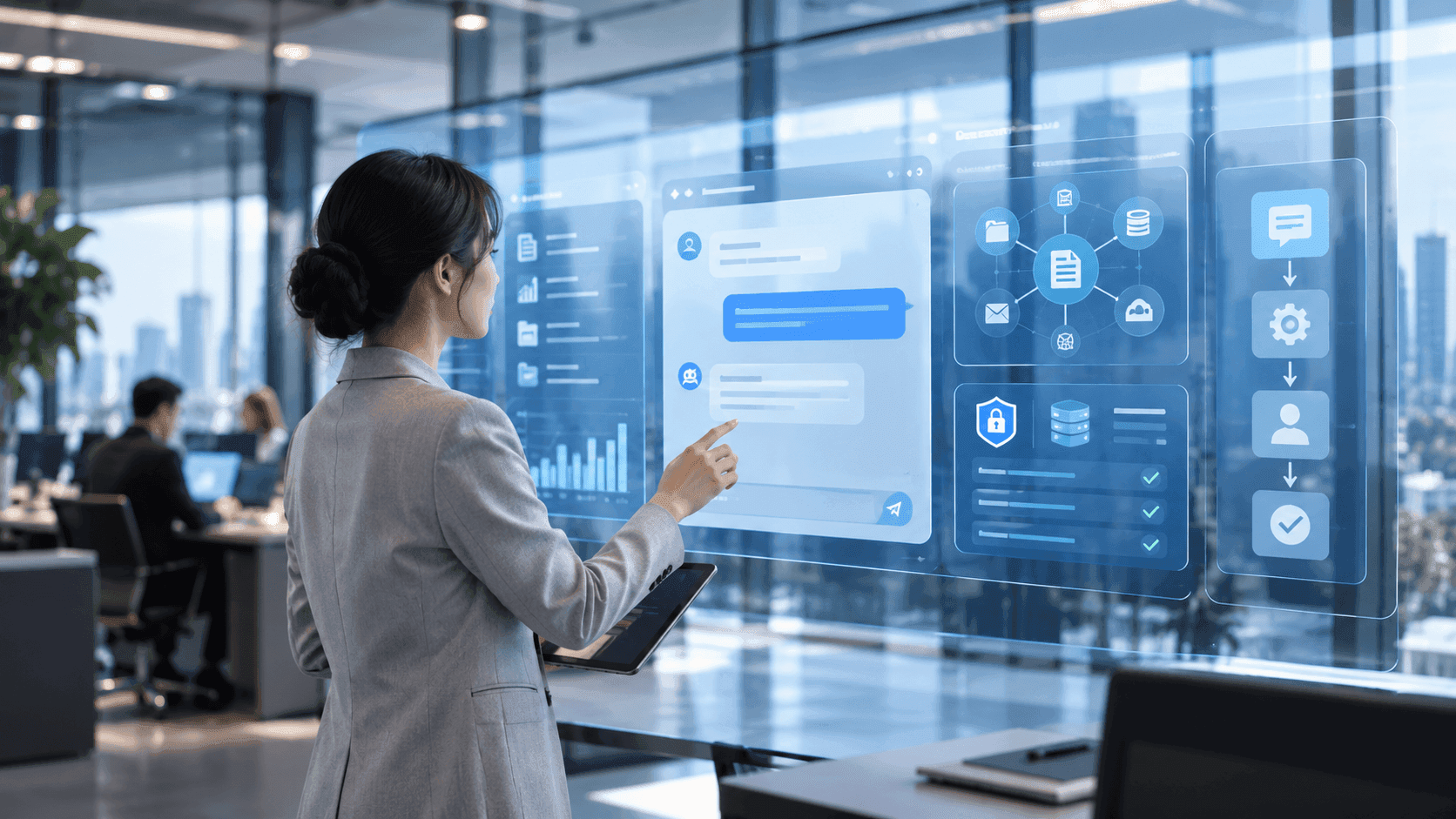
Many organizations are implementing AI agents to automate complex internal workflows across departments. Rather than operating as isolated tools, modern AI systems are increasingly connected across enterprise platforms, allowing businesses to streamline communication, approvals, reporting, and operational coordination.
This enterprise wide integration enables faster execution, improved productivity, and more intelligent decision making across business processes.
Read more: Top 10 Applications of AI Agents in Business
Final Thoughts
AI agents are rapidly transforming how businesses operate in 2026, helping organizations automate workflows, improve customer experiences, and make faster, more intelligent decisions. As AI technology continues evolving, businesses are increasingly adopting different types of AI agents to support scalable and efficient digital operations across industries.
Sphinx is also part of this shift, helping businesses apply AI agents to customer communication, workflow automation, and operational optimization. If you are looking to integrate AI agents into your business processes, Sphinx can help support your digital transformation journey.