
Mobile CRM: The essential strategy every business needs

With the surge in mobile device usage and sales teams increasingly operating in the field to engage with prospective customers, the convergence of mobile technology and field sales efforts has given rise to Mobile CRM.
In this article, we’ll explore the significant uptick in mobile device utilization over recent years, delve into the reasons for integrating a mobile CRM strategy into your business operations, and provide insights on initiating your journey with mobile CRM.
1. What is a Mobile CRM??
First of all, CRM stands for Customer Relationship Management.
CRM stands for Customer Relationship Management. It’s a strategy used across a whole company to increase sales, improve customer service, and keep customers happy. The idea is simple: always think about what’s best for the customer. By doing this, your business can provide great service, making customers more loyal.
For example:
- 86% of people are happy to pay more if they get better service.
- Companies focused on their customers make 60% more money than those that don’t.
- After just one bad experience, a third of customers might leave a brand they usually like.
A CRM software brings together all information from different departments throughout the company to give one, holistic view of each customer in real time. This allows customer-facing employees in areas such as sales, marketing and customer support to make quick and informed decisions on everything from up-selling and cross-selling. Besides, to improving the quality of customer communication and responsiveness, coordinating the management of sales and marketing campaigns.
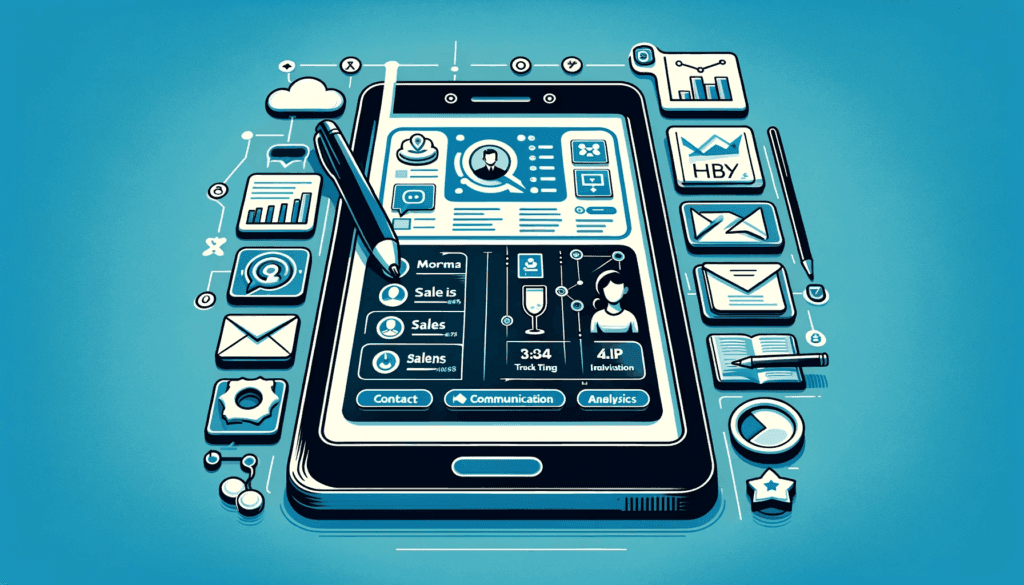
Mobile CRM, also known as Mobile Customer Relationship Management, refers to CRM applications specifically developed for mobile platforms such as smartphones and tablets.
This technology enables your sales teams to access critical customer information either via a dedicated mobile CRM application or through a web browser connected to cloud-based CRM services. The primary advantage of adopting mobile CRM is empowering your sales personnel to retrieve up-to-the-minute data during field engagements with potential and existing customers.
2. Increase in Mobile device usage
The evolution of how we access the internet has seen a pivotal shift towards mobility. The advent of smartphones and tablets has reshaped our digital interactions, leading to a profound change in internet usage patterns. A notable forecast by Microsoft Tag in March 2011 accurately predicted this transformation, foreseeing mobile internet usage eclipsing desktop usage by 2014. This shift underscores a broader trend of digital migration, where connectivity is no longer tethered to stationary devices but has become an integral part of our mobile lifestyle.
A pivotal insight from Mary Meeker’s Internet trends report highlights this shift: 13% of all Internet traffic is now executed from a mobile device, marking a significant increase from 4% in 2011 and up from just 1% in 2009. This surge in mobile internet usage not only reflects changing consumer preferences but also signals a transformative period in digital connectivity. With mobile internet traffic now constituting a significant portion of all online activities, companies are rethinking their digital strategies to cater to this mobile-first world. This transition is especially evident in the adoption of mobile-friendly applications, such as CRM software, which are now essential tools for businesses aiming to stay competitive in a rapidly evolving marketplace. Embracing a mobile strategy is not just a forward-thinking move; it’s become a critical component of successful digital engagement in today’s interconnected world.
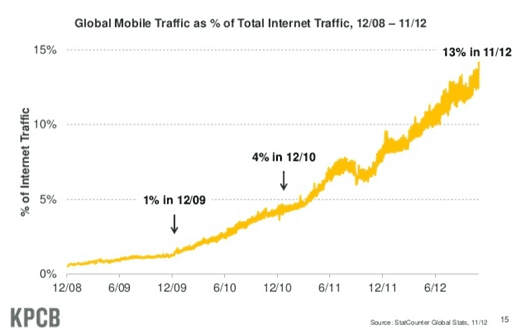
The journey from desktop dominance to mobile primacy marks a significant milestone in the digital era. The implications for businesses are clear: adapt to the mobile landscape or risk being left behind. As we move forward, the integration of mobile strategies into business operations will continue to be a defining factor in achieving digital success. The shift towards mobile is not just a trend but a new standard, signaling an enduring transformation in the way we connect, communicate, and conduct business in the digital age.
3. Adoption rates of Mobile CRM
A 2008 study by Forrester Research revealed that half of all enterprises and over 40% of small and medium-sized businesses (SMBs) were either testing, deploying, or actively using smartphone apps for enhancing their sales force’s efficiency. Fast forward to the end of 2012, and Forbes highlighted the availability of 110 CRM apps in the Apple App Store, alongside 47 in the Android App Store.
Gartner Group anticipated a significant surge in mobile CRM’s popularity, predicting a 500% growth rate by 2014. This forecast starkly contrasts the 225% rise in mobile usage observed from December 2010 to November 2012.
Despite these projections, only half of the organizations were in the process of or considering the adoption of mobile CRM systems, leaving the other half untouched by this technology. Moreover, studies conducted in Europe demonstrated that less than 34% of companies had integrated a mobile CRM solution into their operations.
4. Initiating Mobile CRM: Key steps to take
Launching a mobile CRM system requires careful planning and strategy. Before diving in, it’s crucial to outline your objectives for adopting mobile CRM and understand how your workforce can leverage real-time data access efficiently. Here are three critical areas to focus on before rollout:
- Gaining internal support: Securing support from your sales teams is a prerequisite for a successful mobile CRM implementation. Since they’ll be the primary users of the smartphone app, their endorsement is essential. To win them over, offer comprehensive training that includes user manuals and educational programs, highlighting the benefits and improvements they can expect from using mobile CRM.
- Equipping your team: People appreciate receiving freebies, and one effective method to encourage your sales team to embrace a smartphone-based CRM is by providing them with the necessary hardware. Equip your team with smartphones that have the CRM app pre-installed. Despite most mobile CRM apps being compatible with iOS, Android, and Blackberry platforms, it’s advisable to verify compatibility with your chosen provider beforehand.
- Focusing on app usability: Typically, your sales personnel won’t need the full range of functions on their mobile CRM app that they might access on their desktops. Initially, grant them access only to the essential features they use regularly, such as sending emails, scheduling meetings, and updating contact details. This approach helps streamline their workflow and makes the transition to mobile CRM smoother.
Conclusion
As we wrap up the discussion on mobile CRM, it’s clear that the transition towards a mobile-centric customer relationship strategy is not just beneficial but essential for staying competitive in the digital marketplace. Focusing on your goals, preparing your team, and ensuring the app is user-friendly are key steps to a successful implementation.
In this evolving landscape, having a reliable guide to navigate the intricacies of mobile CRM can be invaluable. Sphinx, offers the support and solutions needed to seamlessly integrate mobile CRM into your business operations, enhancing your team’s efficiency and customer engagement without overwhelming your processes.
Embracing mobile CRM is a strategic move towards future-proofing your customer relationships, and with the right approach, it can transform the way you connect with your customers and drive your business forward.
Find more information about Sphinx on:
Email: contact@sphinxjsc.com
LinkedIn: https://www.linkedin.com/company/sphinx-jsc/
Twitter: https://twitter.com/SphinX_jsc