Agentic AI vs. Generative AI: What You Need to Know

Artificial Intelligence is reshaping how organizations create, analyze, and deliver value. Among the most transformative innovations are Generative AI and Agentic AI, two models that share similar foundations but serve distinct purposes. Generative AI focuses on producing new content like text, images, or code based on user input.
In this blog, we’ll explore how Agentic AI takes automation further by planning, making decisions, and executing actions autonomously to achieve goals. You’ll learn the key differences between the two, their real-world applications, and how each can empower your business to innovate and scale more effectively.
What Is Agentic AI?
According to Zendesk, Agentic AI refers to systems capable of making their own decisions and executing tasks to accomplish defined goals. Instead of relying on fixed, pre-set instructions, it can independently plan and perform a series of actions to reach the desired outcome.
At its core, Agentic AI operates like an intelligent agent that not only understands context but also initiates steps to fulfill objectives without constant human supervision. This autonomy makes it especially powerful in environments that require continuous adaptation, multitasking, or optimization across multiple systems.
Agentic AI Use Cases
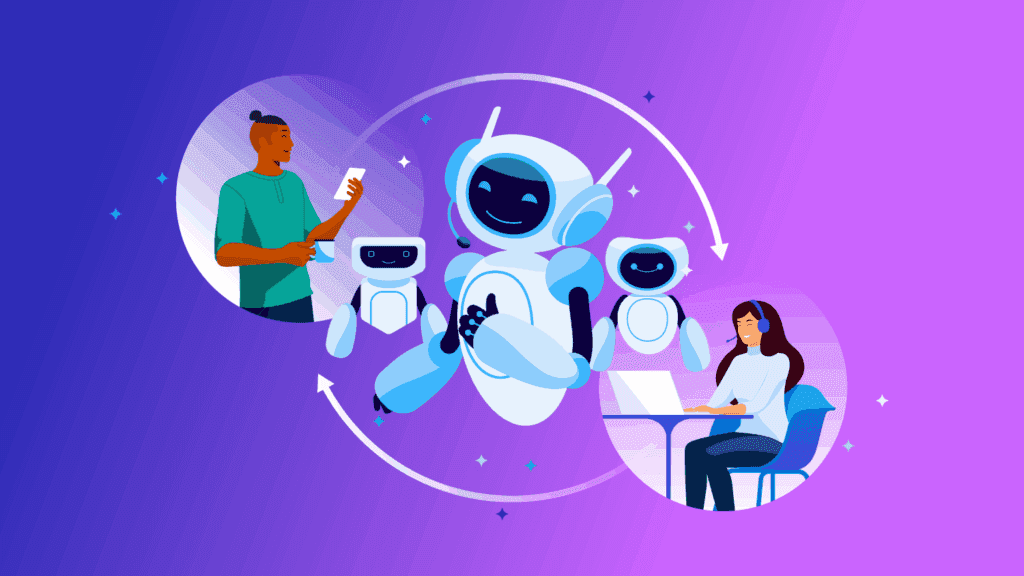
Agentic AI enables systems to think, act, and adapt independently, bringing intelligent automation to real-world business scenarios.
- Workflow Automation: Agentic AI can manage complex workflows across departments, handling repetitive tasks, monitoring progress, and making real-time adjustments to improve efficiency.
- Customer Service and Support: Instead of responding to queries one by one, Agentic AI systems can anticipate customer needs, access data across platforms, and execute solutions such as processing refunds or updating records automatically.
- IT Operations and Monitoring: In IT management, Agentic AI can detect issues, diagnose root causes, and deploy fixes autonomously, minimizing downtime and human intervention.
- Robotics and Autonomous Systems: Robots powered by Agentic AI can make situational decisions for example, in logistics or manufacturing, they can adapt to unexpected obstacles or changes in workflow.
- Business Process Optimization: Agentic AI can analyze end-to-end processes, identify inefficiencies, and reconfigure operations dynamically to align with business goals.
What Is Generative AI?
Generative AI refers to artificial intelligence models designed to create new content based on the data they have been trained on. These models can generate text, images, videos, music, or even computer code by recognizing patterns and relationships in large datasets. Instead of following pre-programmed rules, Generative AI learns from examples, allowing it to produce results that resemble human creativity and understanding.
Unlike Agentic AI, which focuses on goal-oriented actions, Generative AI’s strength lies in content generation and idea exploration. It can enhance productivity, assist with creative tasks, and speed up the development of materials that once required extensive manual effort.
Read more: What is Generative AI and How does it work?
Generative AI Use Cases
Generative AI has found applications across many industries, revolutionizing how businesses innovate and communicate.
- Content Creation: Used in marketing, media, and design, Generative AI can create blog posts, product descriptions, visuals, and videos that align with brand voice and style.
- Software Development: Developers use Generative AI tools to write and optimize code, detect bugs, and accelerate software development cycles.
- Data Analysis and Reporting: AI models can summarize large datasets, generate insights, and prepare analytical reports in natural language, saving hours of manual work.
- Product Design and Prototyping: In manufacturing and architecture, Generative AI helps create design variations, simulate outcomes, and refine concepts before production.
- Education and Training: It can generate interactive learning materials, quizzes, and simulations tailored to learners’ skill levels and goals.
What Are the Differences Between Agentic AI and Generative AI?
Although Agentic AI and Generative AI are built on similar foundations, they differ across several key aspects that shape how they function and deliver value in real-world scenarios.
Role in Customer Experience
Generative AI focuses on enhancing customer interactions by creating intelligent, personalized, and context-aware responses. It can summarize customer messages, suggest helpful replies, and generate support articles or chatbot scripts that align with a company’s tone of voice. Its goal is to make communication more efficient and human-like.
Agentic AI takes this one step further. Rather than assisting human agents, it can manage entire customer service processes from start to finish. For instance, when a customer requests a refund, Agentic AI can verify order details, initiate a return process, and confirm completion all without human intervention. This shift from support to full automation marks the key leap in customer experience delivery.
Level of Autonomy
Generative AI is reactive: it produces output only when prompted. The model depends on user input and does not make decisions or take actions on its own. It helps generate ideas, drafts, or responses but always operates within predefined boundaries.
Agentic AI, by contrast, is proactive and autonomous. It identifies goals, develops action plans, executes steps, and adjusts its strategy based on outcomes. In other words, while Generative AI responds, Agentic AI acts. This autonomy allows it to perform multi-step operations, coordinate resources, and make decisions in dynamic environments.
Underlying Technologies
Generative AI is built primarily on large language models (LLMs) and neural networks that predict and generate new data based on training patterns. These systems specialize in creativity and context understanding but lack reasoning or long-term memory.
Agentic AI builds on that same foundation but adds layers of reasoning, memory, and planning. It combines LLMs with frameworks like retrieval-augmented generation (RAG), reinforcement learning, and tool integration APIs. These capabilities allow it to analyze complex contexts, access external systems, and carry out tasks end-to-end rather than generating content alone.
Complexity and Coordination
Generative AI solutions are often standalone systems optimized for specific creative or analytical tasks such as text, image, or data generation. They rely on direct human input for direction.
Agentic AI operates as an ecosystem. It coordinates multiple AI tools and data sources to achieve complex objectives, from managing workflows to conducting transactions. Its design requires higher system integration and governance to ensure safe, transparent, and reliable execution.
How Agentic AI and Generative AI Work
While agentic AI and generative AI share foundational principles of machine learning, they operate through very different mechanisms. Understanding how each system works helps clarify why their applications and outcomes vary so significantly.
How Generative AI Works
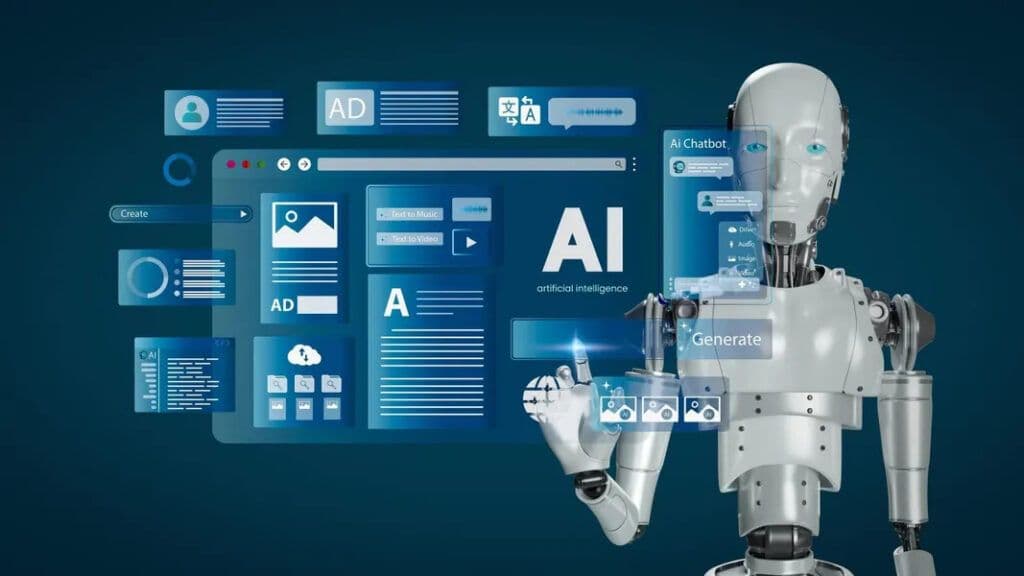
Generative AI is built on large-scale models trained to recognize patterns in massive datasets. During training, these models learn the relationships between words, pixels, sounds, or other data types, enabling them to generate new outputs that resemble human-created content.
When prompted, a generative model predicts what comes next based on learned probabilities, producing text, images, code, or music that align with user intent. Its strength lies in creativity and knowledge synthesis, not in taking actions or making decisions.
How Agentic AI Works
Agentic AI extends the foundation of generative models by adding reasoning, memory, and goal-directed behavior. Instead of stopping at content creation, it uses output from LLMs or other models as part of a larger decision-making loop.
A typical agentic system consists of four key components: perception, reasoning, planning, and action. It can observe an environment or dataset, analyze the situation, plan a sequence of steps, and execute them autonomously through APIs or connected tools. This process allows the AI to complete complex tasks independently, adapt to changing inputs, and continuously refine its performance through feedback loops.
The future of Agentic and Generative AI
As AI continues to advance, the line between agentic and generative systems is rapidly fading. The next evolution of artificial intelligence will be defined by their convergence, where creativity meets autonomy and reasoning merges with innovation.
In 2025 and beyond, several trends are shaping this transformation. Generative AI will become more context-aware and multimodal, capable of synthesizing text, images, and data insights simultaneously. Agentic AI will evolve toward goal-driven autonomy, where systems learn from feedback, plan ahead, and coordinate multi-step tasks across departments without direct supervision.
The rise of hybrid AI architectures combining generative creativity with agentic execution will power next-generation enterprise ecosystems. These systems will not only generate ideas but also act on them, optimizing operations, customer engagement, and innovation cycles in real time.
Businesses that embrace these trends early will gain a major competitive edge, using AI not merely as a support tool but as a strategic collaborator that enhances decision-making, efficiency, and long-term growth.
Final Thoughts
Generative AI and Agentic AI are reshaping how organizations think, create, and act. Generative models drive creativity and insight generation, while agentic systems enable autonomous decision-making and execution. Together, they mark a new stage of intelligent transformation across industries.
At Sphinx, we continue to explore how AI can empower enterprises to work smarter, innovate faster, and build more adaptive digital ecosystems for the future.