


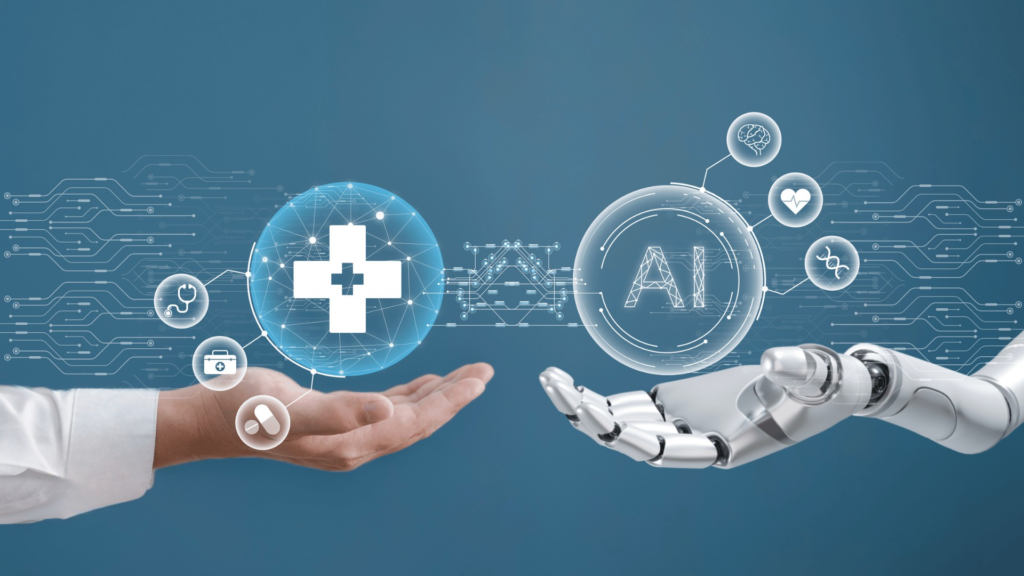
Artificial Intelligence (AI) is rapidly reshaping the healthcare industry, from improving diagnostic accuracy to streamlining complex operations. As medical systems face increasing pressure to deliver faster, more efficient, and personalized care, AI is emerging as a critical enabler of innovation.
This blog explores how AI is being applied in healthcare today, including its key use cases, operational impact, benefits, and challenges. It also outlines practical AI solutions for healthcare organizations, how to choose the right implementation partner, and what the future of AI in healthcare may look like.
What is AI in Healthcare?
Artificial Intelligence (AI) in healthcare refers to the use of advanced algorithms and computational models such as machine learning (ML), natural language processing (NLP), and computer vision to analyze medical data, support clinical decisions, and automate healthcare workflows.
Unlike traditional software, AI systems are designed to learn from data, identify patterns, and continuously improve over time. This allows them to assist in areas such as disease detection, risk prediction, treatment planning, and patient engagement.
AI in healthcare is not about replacing medical professionals. Instead, it acts as an intelligent support layer, helping doctors, nurses, and administrators make faster, more accurate, and more informed decisions.
Read more: Generative AI in Healthcare: Revolutionizing the Future of Medicine
AI vs. Traditional Healthcare Systems
Traditional healthcare systems rely on manual processes and human expertise, while AI introduces a data-driven and adaptive approach to improve efficiency and outcomes.
| Aspect | Traditional Healthcare Systems | AI-Powered Healthcare Systems |
|---|---|---|
| Core Function | Focus on treatment and record-keeping | Focus on prediction, automation, and intelligent support |
| Data Analysis | Limited ability to process large and complex data | Capable of analyzing vast datasets in real time |
| Decision-Making | Based on physician experience and static guidelines | Data-driven with predictive insights and recommendations |
| Patient Care | Standardized and reactive care | Personalized and proactive care |
| Workflow Automation | Minimal automation, many manual tasks | High level of automation across clinical and administrative workflows |
This comparison highlights how AI enhances traditional systems by adding intelligence, scalability, and efficiency, enabling a shift toward more proactive and patient-centered healthcare.
Why AI Is Transforming the Healthcare Industry
Artificial Intelligence (AI) is transforming the healthcare industry by enabling a more data-driven and efficient approach to care delivery. As the volume of healthcare data continues to grow, traditional systems struggle to process and utilize it effectively. AI addresses this gap by analyzing large and complex datasets, turning raw information into actionable insights that support faster and more accurate decision-making.
At the same time, healthcare organizations are under increasing pressure to improve efficiency while managing costs. AI helps streamline operations by automating routine tasks such as documentation, scheduling, and patient communication. This reduces administrative burden and allows healthcare professionals to focus more on patient care, ultimately improving overall productivity.
AI is also driving a shift toward more proactive and personalized healthcare. By identifying patterns and predicting potential risks, it enables earlier interventions and tailored treatment plans. This not only enhances patient outcomes but also supports a more sustainable healthcare system by reducing unnecessary treatments and hospital visits.
Key Use Cases of AI in Healthcare
AI is being applied across the healthcare ecosystem, from clinical decision-making to operational efficiency and patient engagement. Below are the most impactful and widely adopted use cases.
Medical Imaging and Diagnostics
AI-powered models can analyze medical images such as X-rays, CT scans, and MRIs with high precision. By detecting patterns and anomalies that may be difficult for the human eye to identify, AI supports earlier diagnosis of conditions like cancer, cardiovascular diseases, and neurological disorders. It also helps reduce diagnostic errors and speeds up the review process for clinicians.
Predictive Analytics and Risk Assessment
AI enables healthcare providers to move from reactive to proactive care by predicting potential health risks. By analyzing historical and real-time patient data, AI can identify individuals at risk of chronic diseases, hospital readmission, or complications. This allows for early intervention, better care planning, and improved patient outcomes.
Virtual Assistants and Patient Engagement
AI-powered chatbots and voice assistants are increasingly used to enhance patient interaction. They can handle appointment scheduling, answer common medical questions, provide medication reminders, and support basic triage. This improves accessibility, reduces wait times, and ensures more consistent communication between patients and healthcare providers.
Drug Discovery and Development
AI is significantly accelerating the drug discovery process. It can analyze biological data, identify potential drug candidates, and predict their effectiveness and safety. This reduces the time and cost associated with traditional research and development, helping bring new treatments to market faster.
Personalized Medicine
AI enables more personalized treatment plans by analyzing patient-specific data such as medical history, genetics, and lifestyle factors. This approach allows healthcare providers to tailor therapies to individual needs, improving treatment effectiveness and reducing adverse outcomes.
Clinical Decision Support Systems
AI-driven decision support tools assist healthcare professionals by providing evidence-based recommendations in real time. These systems analyze patient data alongside clinical guidelines to help doctors make more informed decisions, particularly in complex or high-risk cases.
Workflow and Administrative Automation
AI is widely used to automate administrative processes such as medical documentation, billing, coding, and claims management. This reduces manual workload, minimizes errors, and improves overall operational efficiency within healthcare organizations.
How AI Is Optimizing Healthcare Operations
Artificial Intelligence (AI) is redefining healthcare operations by enabling more efficient, data-driven workflows. Healthcare organizations often rely on complex, resource-intensive processes, and AI helps streamline these by reducing manual intervention and improving overall system performance.
A key impact of AI is in workflow automation. Administrative tasks such as documentation, scheduling, billing, and claims processing can be handled more quickly and accurately through AI systems. This reduces operational costs, minimizes errors, and allows healthcare staff to focus more on patient care rather than routine processes.
AI also improves operational decision-making and resource allocation. By analyzing patient flow, staffing patterns, and service demand, AI helps organizations optimize capacity and respond proactively to changing needs. The result is a more scalable and responsive healthcare system that delivers better efficiency and a more seamless patient experience.
Benefits of AI in Healthcare
AI delivers measurable value across clinical, operational, and financial dimensions, making it a strategic asset for modern healthcare organizations.
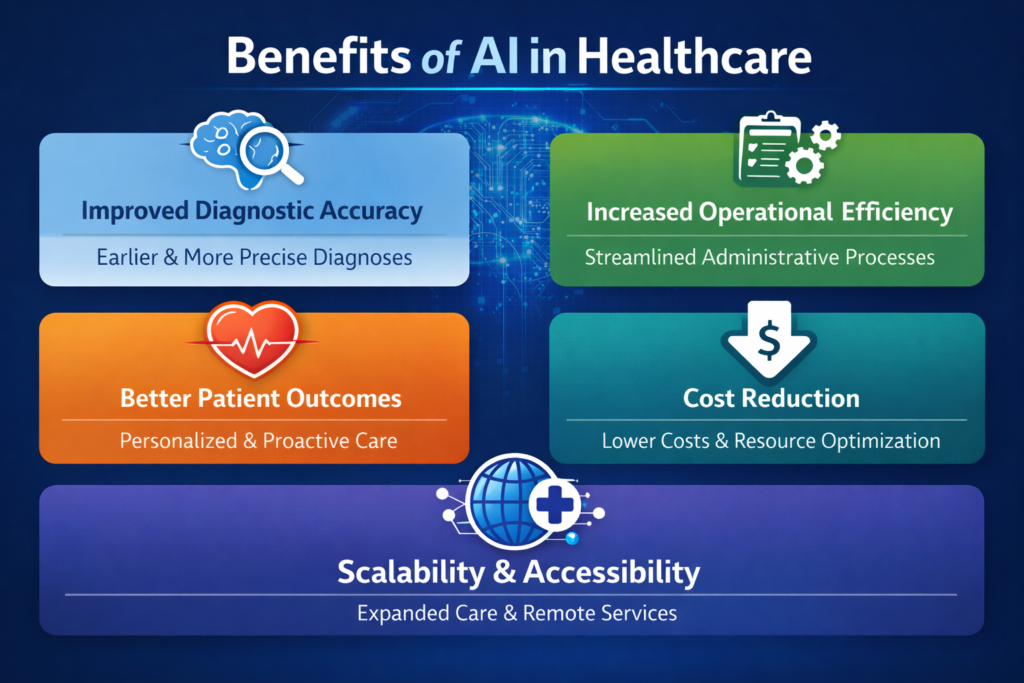
Improved Diagnostic Accuracy
AI enhances clinical decision-making by identifying patterns in medical data that may be difficult to detect manually. This leads to earlier and more accurate diagnoses, particularly in areas such as imaging and disease detection.
Increased Operational Efficiency
By automating administrative tasks like documentation, scheduling, and billing, AI reduces manual workload and streamlines workflows. This improves productivity and allows healthcare professionals to focus more on patient care.
Better Patient Outcomes
AI supports personalized and proactive care by analyzing individual patient data and predicting potential risks. This enables earlier interventions and more effective treatment plans, ultimately improving health outcomes.
Cost Reduction
AI helps optimize resource utilization and reduce unnecessary procedures or hospital readmissions. Over time, this contributes to lower operational costs and more sustainable healthcare delivery.
Scalability and Accessibility
AI systems can scale without requiring proportional increases in human resources. This makes it easier for healthcare providers to handle growing patient demand and expand access to care, including through remote and digital health services.
Challenges of AI in Healthcare
Despite its advantages, implementing AI in healthcare comes with several critical challenges that organizations must address carefully.
Data Privacy and Security
Healthcare data is highly sensitive, and AI systems require access to large datasets to function effectively. Ensuring compliance with data protection regulations and maintaining strong cybersecurity measures is essential.
Integration with Existing Systems
Many healthcare providers operate on legacy infrastructure, making it difficult to integrate AI solutions seamlessly. Compatibility and interoperability remain key barriers to adoption.
Data Quality and Bias
AI models depend on the quality of the data they are trained on. Incomplete, inconsistent, or biased datasets can lead to inaccurate predictions and potentially unfair outcomes in patient care.
High Implementation Costs
Deploying AI solutions requires significant investment in technology, infrastructure, and training. For some organizations, especially smaller providers, this can be a major barrier.
Trust and Adoption
Healthcare professionals may be cautious about relying on AI systems, particularly if the decision-making process is not transparent. Building trust requires clear validation, explainability, and proven clinical value.
AI Solutions for Healthcare Organizations
To fully unlock the value of AI, healthcare organizations need the right combination of tools, platforms, and tailored solutions. Depending on their scale and objectives, businesses can adopt AI in several ways.
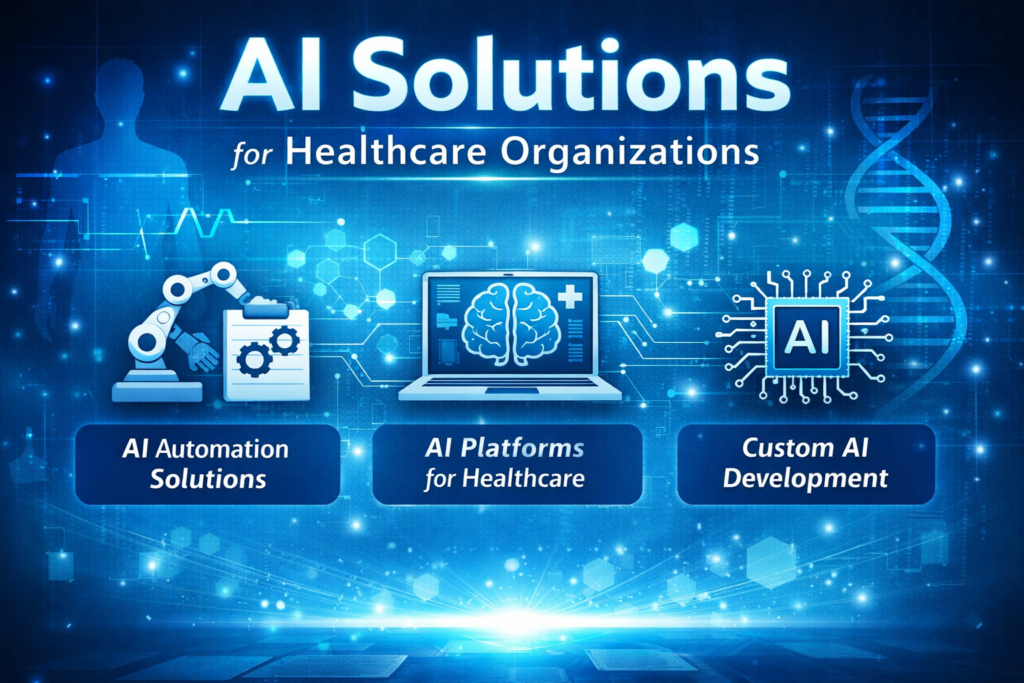
AI Automation Solutions
AI automation focuses on streamlining repetitive and time-consuming processes such as patient scheduling, medical documentation, billing, and claims processing. By reducing manual workload, healthcare providers can improve efficiency while minimizing human error.
Automation also plays a critical role in patient communication, enabling faster response times and more consistent support through AI-driven chat and voice systems.
AI Platforms for Healthcare
AI platforms provide the infrastructure needed to build, deploy, and manage AI models at scale. These platforms often include tools for data integration, model training, and real-time analytics.
For healthcare organizations, choosing the right platform means ensuring compatibility with existing systems, compliance with data regulations, and the ability to scale as data volumes grow.
Custom AI Development
In many cases, off-the-shelf solutions may not fully meet the specific needs of a healthcare provider. Custom AI development allows organizations to design solutions tailored to their workflows, patient demographics, and clinical requirements.
This approach is particularly valuable for:
- Specialized diagnostics
- Proprietary data models
- Unique operational challenges
Selecting the Right AI Partner in Healthcare
Choosing an AI partner is a critical decision that directly impacts the success of implementation.
Healthcare organizations should consider:
- Domain Expertise: Experience in healthcare-specific use cases and regulatory environments
- Data Security Standards: Strong capabilities in protecting sensitive patient information
- Scalability: Ability to support long-term growth and increasing data demands
- Integration Capability: Seamless integration with existing healthcare systems
- Transparency: Clear explanation of how AI models work and make decisions
A reliable partner not only provides technology but also helps guide strategy, implementation, and ongoing optimization.
The Future of AI in Healthcare
The future of AI in healthcare will be defined by deeper integration, smarter systems, and more connected care experiences. Rather than being used in isolated applications, AI will become a core layer embedded across clinical, operational, and patient-facing processes.
A major shift will be toward predictive and preventive care. By continuously analyzing real-time and historical patient data, AI will enable earlier detection of risks, more accurate diagnoses, and highly personalized treatment plans. At the same time, advancements in AI will support real-time clinical decision-making and more seamless patient engagement through digital and remote care solutions.
As adoption grows, AI will increasingly act as a collaborative tool for healthcare professionals. It will enhance decision-making, improve efficiency, and help organizations scale care delivery while maintaining quality, ultimately shaping a more proactive and patient-centered healthcare system.
Final Thoughts
AI is rapidly becoming a core part of modern healthcare, improving how data is used, decisions are made, and care is delivered. From diagnostics to operations, its ability to enhance efficiency and enable more personalized, proactive care is reshaping the industry.
To fully realize these benefits, healthcare organizations need the right strategy and technology partner. Companies like Sphinx JSC support this transition by delivering practical AI solutions that are scalable, secure, and aligned with real-world healthcare needs.



CEO - Son Le
OTHER BLOGS
Blogs
AI Chatbot Applications: Benefits, Use Cases, and Future Trends
Artificial Intelligence (AI) is rapidly transforming the way businesses communicate with customers, automate workflows, and deliver personalized experiences. At the center of this transformation is the AI chatbot, an intelligent virtual assistant capable of understanding natural language, answering questions, and supporting users across websites, mobile apps, and messaging platforms. As...
Read MoreBlogs
How AI Is Revolutionizing Hotel Operations and Revenue
The hospitality industry is undergoing one of its biggest transformations in decades. As guest expectations continue to rise and operational costs increase, hotels are turning to Artificial Intelligence (AI) to stay competitive. From maximizing room revenue to delivering personalized guest experiences, AI is no longer a futuristic concept. It has...
Read MoreBlogs
AI Chatbots in Hospitality: Drive Bookings & Better Service
The hospitality industry is rapidly embracing AI as guest expectations continue to evolve. Today’s travelers expect instant responses, personalized recommendations, and seamless communication throughout their booking journey. To meet these demands while improving operational efficiency, more hotels are turning to AI chatbots. Modern AI chatbots do far more than answer...
Read MoreOTHER BLOGS
Our Sevices
IoT Development
SphinX offers cutting-edge IoT development services, seamlessly connecting devices and providing innovative solutions for a...
Xem thêmOur Sevices
Blockchain Development
We are highly proficient in engineering reliable and secure blockchain technologies from the ground up,...
Xem thêmOur Sevices
ERP & CRM Development
ERP & CRM development services that you need! Streamline business processes and enhance organizational efficiency....
Xem thêmOTHER BLOGS
Our Sevices
IoT Development
SphinX offers cutting-edge IoT development services, seamlessly connecting devices and providing innovative solutions for a...
Xem thêmOur Sevices
Blockchain Development
We are highly proficient in engineering reliable and secure blockchain technologies from the ground up,...
Xem thêmOur Sevices
ERP & CRM Development
ERP & CRM development services that you need! Streamline business processes and enhance organizational efficiency....
Xem thêm